Quick Intro
I built Cora to make dashboards simple again. It’s a local-first dashboard tool that lives on your machine, reads from simple config files, and keeps your data close to the source.
The idea was straightforward: instead of yet another cloud service with monthly fees and data concerns, what if dashboards could just be files in your project that you run locally?
How It Works
Cora reads a dashboard.json file and figures out what to display. You connect your data sources in cora.config.yaml, and Cora handles the rest—fetching, caching, and rendering everything in a clean local interface.
What I’m most proud of is the agent-safe endpoint. AI assistants can update individual widgets through a dedicated API without touching your files directly, which makes it much safer to let agents help with your dashboard updates.
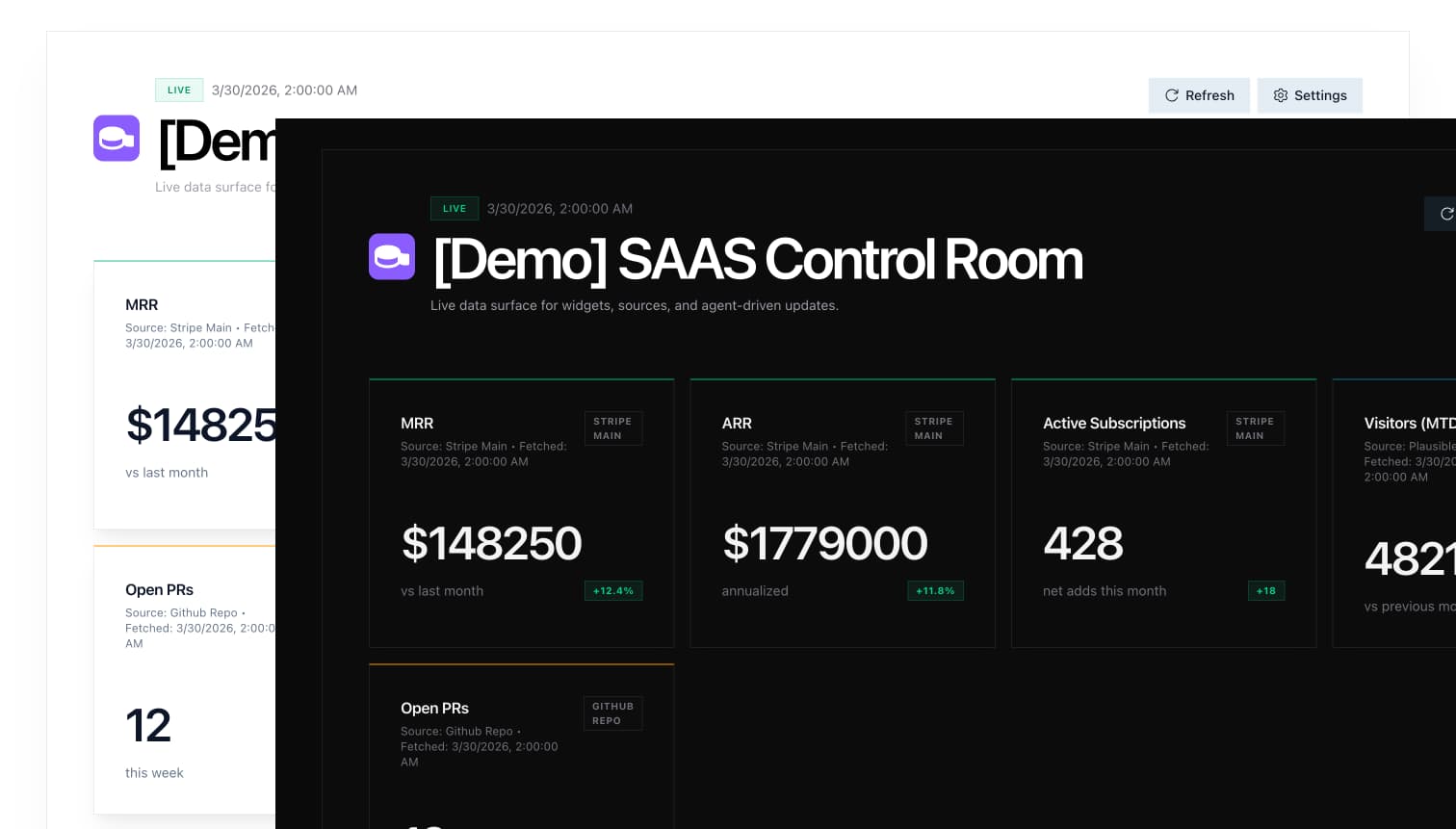
Screenshot
Tech Behind
Built with TypeScript and React, using Bun for development speed and publishing as a Node.js CLI. The UI runs on React 19 with Chart.js for visualizations, and everything stays local with AES-256 encrypted credential storage.
It connects to the tools you’d expect—Postgres, Stripe, Plausible, GitHub—and ships with templates for common use cases like SaaS metrics, freelancer tracking, and developer stats.
Check out the website or GitHub repo to learn more.